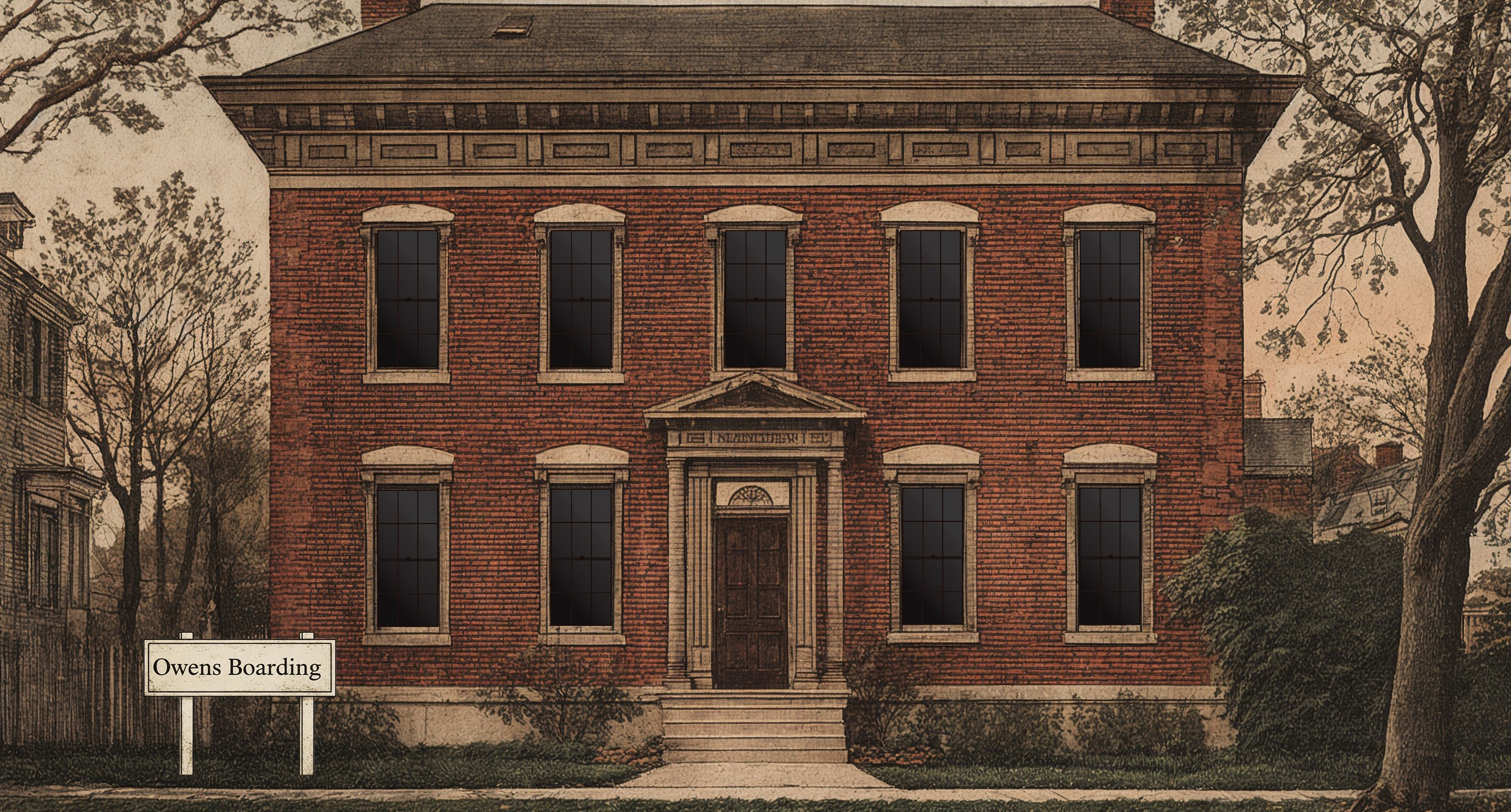
About Owens Boarding
Robert Owens possessed valuable skills in 1840s Arkansas, a slave state. His skills were the kind that made it possible for the enslaved like Robert to work it such that he convinced his slaveholder to hire him out, divvy the profits, and Owens could save enough to “self-purchase”. Buying one’s freedom did not come cheaply—research shows that those in bondage who could negotiate their emancipation would pay, on average, 19% above ‘open-market value’. In other words, slaveholders pocketed a tidy profit. They also, generally, turned their basis into another purchase.
By the early 1850s Owens, now free, established his own livery, lumber and feed business in a small but growing Los Angeles. Robert and wife Winnie also ran a boarding house.
Was the house a safe haven to the enslaved in a nominally-free, slavery-tolerant California in the years before the Civil War? In other words, did the Owens Boarding House function as a “western depot” in the “Underground Railroad”? Decades later, a man who knew Owens and the boarding house would write of it the following:
“Many slave owners have claimed that their property was kept in hiding at this place, but I have known of but one instance. The master of this woman was a drunken brute that resided at Cucamonga.”
—Los Angeles Herald, 12 May 1901
There’s more about Winnie, Robert, and their deep, familial relationship with Biddy Mason, on the Boarding House page, and at SepiaFeatures.Substack.com.
“Boarding House” Lives